
What is ATC ?
The Automatic Trend Center (ATC) is a data visualization engine specifically engineered for industrial digital transformation. By seamlessly integrating decentralized historical databases across various plants and systems, it transforms complex raw data into intuitive trend curves. Through its core "Automated Scheduled Generation" feature, ATC consistently delivers precise trend analysis charts, ensuring decision-makers can capture the full context of equipment operations in real-time.
ATC overcomes the visualization constraints of traditional historical database systems by providing comprehensive multi-dimensional analytical charts, effectively eliminating labor-intensive manual charting processes. If you are facing challenges such as fragmented data or time-consuming reporting, ATC is the solution you need. We empower your team to shift their focus from "tedious data processing" to "high-value strategic analysis," turning historical data into a true competitive advantage.
Features
Data Integration
Integrate PI/Historian data with stacked trend comparisons.
Monitoring & Inquiry
Set baselines and analyze correlations between data points.
Annotation & Comparison
Annotate anomalies and compare trends across time periods.
Auto-Schedule & Web
Auto-generate PDF reports with anytime browser access.
How ATC works
ATC acts as a "translator" between raw data and strategic decisions, converting data streams into high-value PDF reports and trend charts through a simple three-step process :
Data Collection
Auto-connect to decentralized databases for real-time data retrieval.
Smart Analysis
Configure trend curves and annotate anomalies for contextual insights.
Automated Output
Schedule automatic PDF reports and deliver them to key stakeholders.
Benefits
Integrated Value
Break database silos for unified, plant-wide analysis.
Proactive Prevention
Detect anomalies early to prevent unplanned shutdowns.
Faster Resolution
Accelerate root cause analysis via contextualized data.
Management Efficiency
Eliminate manual charting to handle high-volume demands.
System Requirements
To ensure optimal performance and system stability, we recommend that your server environment meets the following specifications :
Server Specifications
| CPU | RAM | Storage | Network | Operating System | Database |
|---|---|---|---|---|---|
|
Quad-core or higher, Intel or AMD x86 processor, 2.6 GHz or faster. Recommended: 3rd Gen Intel® Xeon® Scalable (Ice Lake / Cooper Lake) or 10th Gen Intel® Core™ (Comet Lake) or later. |
16GB DDR4 or higher | 1TB SSD or larger | 1Gbps Wired Ethernet Adapter | Microsoft Windows Server 2022 Standard x64 or later | Microsoft SQL Server 2022 Standard x64 or later |
Client Requirements
| Display Resolution | Supported Browsers |
|---|---|
| 1920 x 1080 (Minimum Requirement) | Google Chrome, Microsoft Edge, Firefox, Safari. |
※ Note: Actual hardware requirements may vary depending on the data volume, system load, and the number of concurrent users.
Customer story
Digital Transformation in Semiconductor Manufacturing
The client is a pioneer in Taiwan’s semiconductor industry, headquartered in the Hsinchu Science Park. In stride with Industry 4.0 advancements, the enterprise has achieved a highly digitized production environment, with core manufacturing facilities strategically located in the technology hubs of Hsinchu, Taichung, and Tainan.
As a core pillar of the global electronics supply chain, the stability and continuity of its process equipment are critical to market supply. Consequently, the client maintains exceptionally high technical standards for "data mobilization" and "predictive maintenance," striving to achieve a zero-downtime operational goal through precision data monitoring.
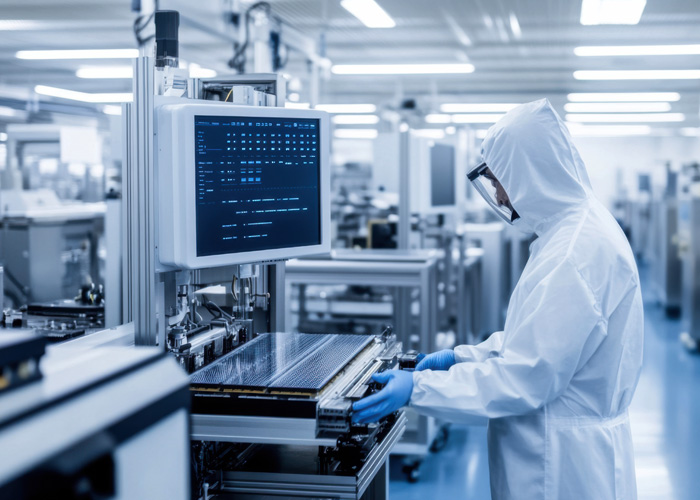
In a semiconductor production environment striving for zero downtime, data is a vital asset; however, fragmented information lacking visualization often hinders strategic decision-making. Despite possessing extensive historical databases, the client faced critical bottlenecks within their existing architecture when addressing high-intensity monitoring demands, specifically regarding restricted access flexibility, overloaded reporting capacity, and the inability to capture subtle data fluctuations.
-
Restricted Monitoring Access
Existing systems lacked the flexibility for personnel to access equipment trend charts anytime, anywhere.
-
System Overload
High demand for charts during daily meetings caused frequent system congestion, consuming significant manual wait times.
-
Detection of Transient Anomalies
An urgent need for tools capable of capturing instantaneous abnormal surges to prevent process risks.
To eliminate data silos and boost decision efficiency, the enterprise deployed ATC as a centralized visualization hub across multiple sites. By integrating with AVEVA Historian, the solution leverages web technology and smart scheduling to transform fragmented data into real-time, role-based strategic insights.
-
Web-Based Monitoring
Rapidly creates trend charts across sites and departments via a web interface, supporting real-time previews and contextual annotations to enhance communication.
-
Role-Based Empowerment
Integrates with personnel databases to implement access control, assigning permissions based on roles to ensure information security.
-
Automated Scheduling
Deeply integrated with AVEVA Historian for automated report generation based on preset schedules, including front-end data redundancy for continuous operation.
Through automated trend analysis, the enterprise successfully transformed dormant data into high-value operational assets. ATC not only significantly enhanced the efficiency of facility analysis but also achieved exceptional risk control, precisely preventing substantial production losses.
-
Prevented Loss
Intercepted 17 pre-trip anomalies, saving over 200M TWD in potential scrap.
-
Holistic Insight
Overcame data scaling issues for precise multi-indicator comparisons.
-
Operational Efficiency
Operational Efficiency: Eliminated manual charting, drastically reducing report and resolution time.
Begin Your Smart Factory Journey
Connect with Our Experts
To learn more about how we plan, integrate, and build automation and smart factory systems tailored to your needs. Feel free to contact our experts!